
Did you know that one in ten people in the UK are dyslexic? And does it surprise you that famous names such as Tom Cruise, Bill Gates and Richard Branson all have a dyslexia diagnosis? Being dyslexic can mean that children need to access learning in a different way – one that allows them extra processing time, and more opportunities to learn in a multi sensory way. But it doesn’t mean that they should be held back in any way. As we begin Dyslexia Awareness Month, let’s take a look at the challenges that dyslexia can cause, and how we can help to support children using the magic of outdoor learning.
Did you know that one in ten people in the UK are dyslexic?
Spelling
What’s the challenge?
While most dyslexic children can learn to read well, spelling difficulties are often more difficult to overcome. This is most likely because dyslexia has a significant impact on phonological processing – children can face difficulties in breaking words down into individual phonemes, and so can’t associate sounds with letters in order to spell them.
How can we support?
A focus on looking at the prefixes and suffixes in words, rather than individual units of sounds, can be helpful here. One idea is to set up a playground game based around different suffixes. Label each corner of the playground with a suffix (for example -ed, -ing, -ly, -s). Now, give children root words and ask them to run to the corner of the playground with the suffix that can be attached to their word. Continue in a relay fashion!
What’s the challenge?
English is a particularly complex language, with a number of different rules, letter patterns – and even words that don’t follow the rules at all. Dyslexic learners often need extra practise to help them remember the formation of these tricky words in particular.
How can we support?
The outdoor environment provides many opportunities for practising the spelling of tricky words in a fun and engaging way – helping learning to ‘stick’. Use natural materials to recreate the spelling of different words in a number of ways. For example, ask a child to collect leaves, stones and sticks and use them to form the letters in the word ‘friend’ three different times. The extra time it takes to create the word (as opposed to just writing it) gives opportunity for processing, and the repetition provides time to practise.
Handwriting
What’s the challenge?
For children with dyslexia, making the links between the shape of a word and the sound it makes can be difficult. Children can quickly become bored and disengaged with this process if it doesn’t come easily to them.
How can we support?
Taking learning outside can help children to engage in an activity that they would otherwise find tricky. One activity to link handwriting with spelling is to have children practise a particular sound or group of letters with chalk on the playground. They might practise the letters ‘ck’ for example. Then, ask children to find objects with the same sound, and use a post-it note and a pen to label it (eg. stick, rock, backpack). This transfers the learning of the letter formation from large-scale with chalk, to small-scale with a pen.
What’s the challenge?
If children are reluctant writers, because they already find the process difficult as a result of dyslexia, they can loose motivation to pick up a pen and engage with learning. Hand strength declines and fine motor skills can diminish.
How can we support?
The outdoor environment offers so many opportunities for developing hand strength and fine motor skills. One activity that could be useful is using a pair of tweezers or a tooth pick to collect natural materials – berries off a tree, blades of grass or even transferring gravel from one area of the playground to another would work fantastically.
Reading
What’s the challenge?
Difficulties with learning to read can be the first sign that a child has dyslexia. It can take a huge amount of effort for a dyslexic child to read, and this can be tiring and highly demotivating. Often, young children with dyslexia can be put off reading by these negative first experiences of books.
How can we support?
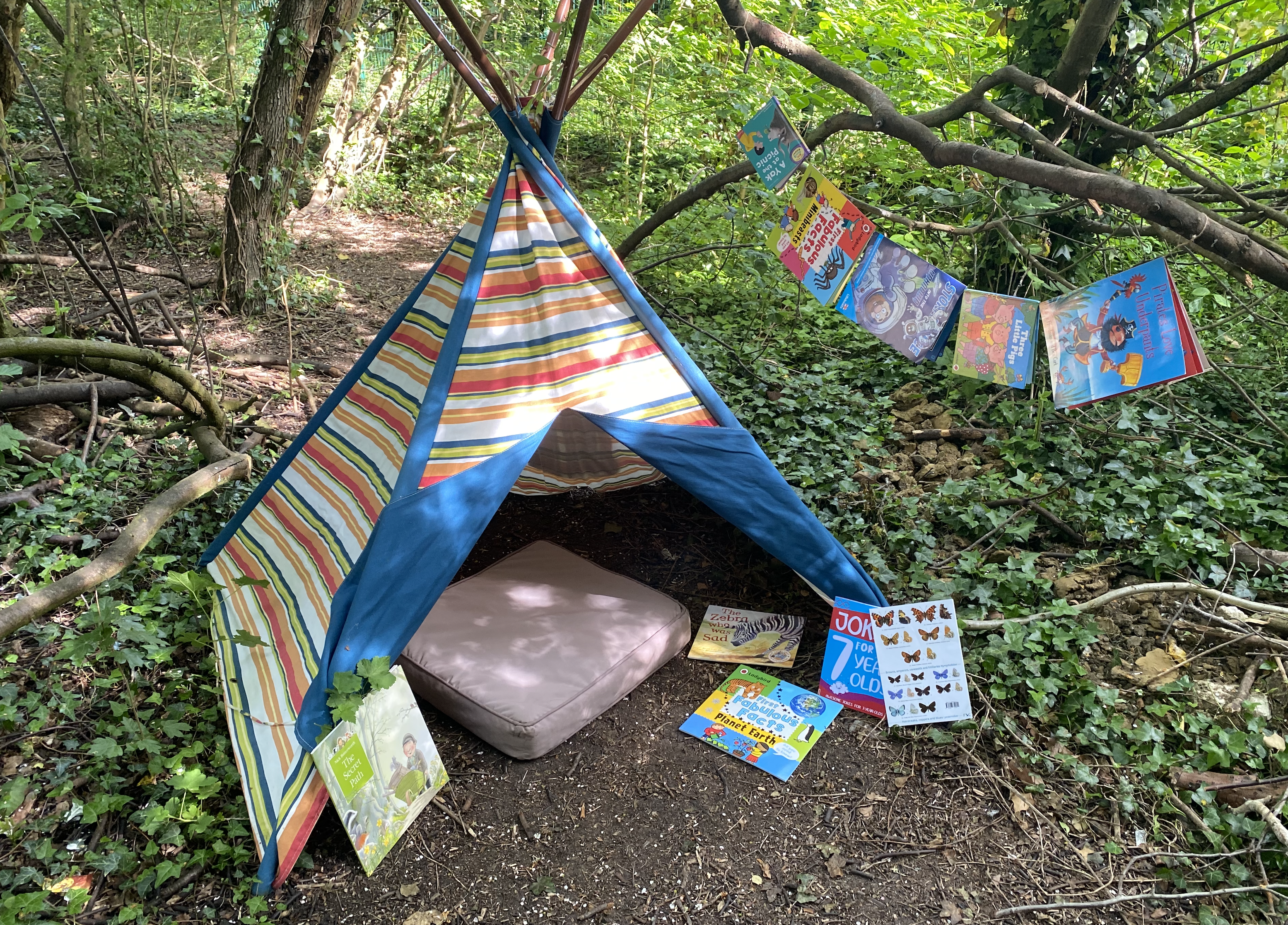
Helping a child to enjoy books is crucial here. Why not take a child outside, away from the pressures of the classroom, into a reading area, den, or even a homemade shelter to look through a book? Offer a hot chocolate and marshmallows too. Read a book together – one page each, for example, and they will start to associate reading with quality time and enjoyment.
With all this in mind, as educators, let’s take some time to think about the dyslexic children in our own classrooms. Support for these children in their early stages of learning is crucial – and the outdoor environment offers so many opportunities to help. Strategies which help dyslexic learners will benefit ALL learners.
